
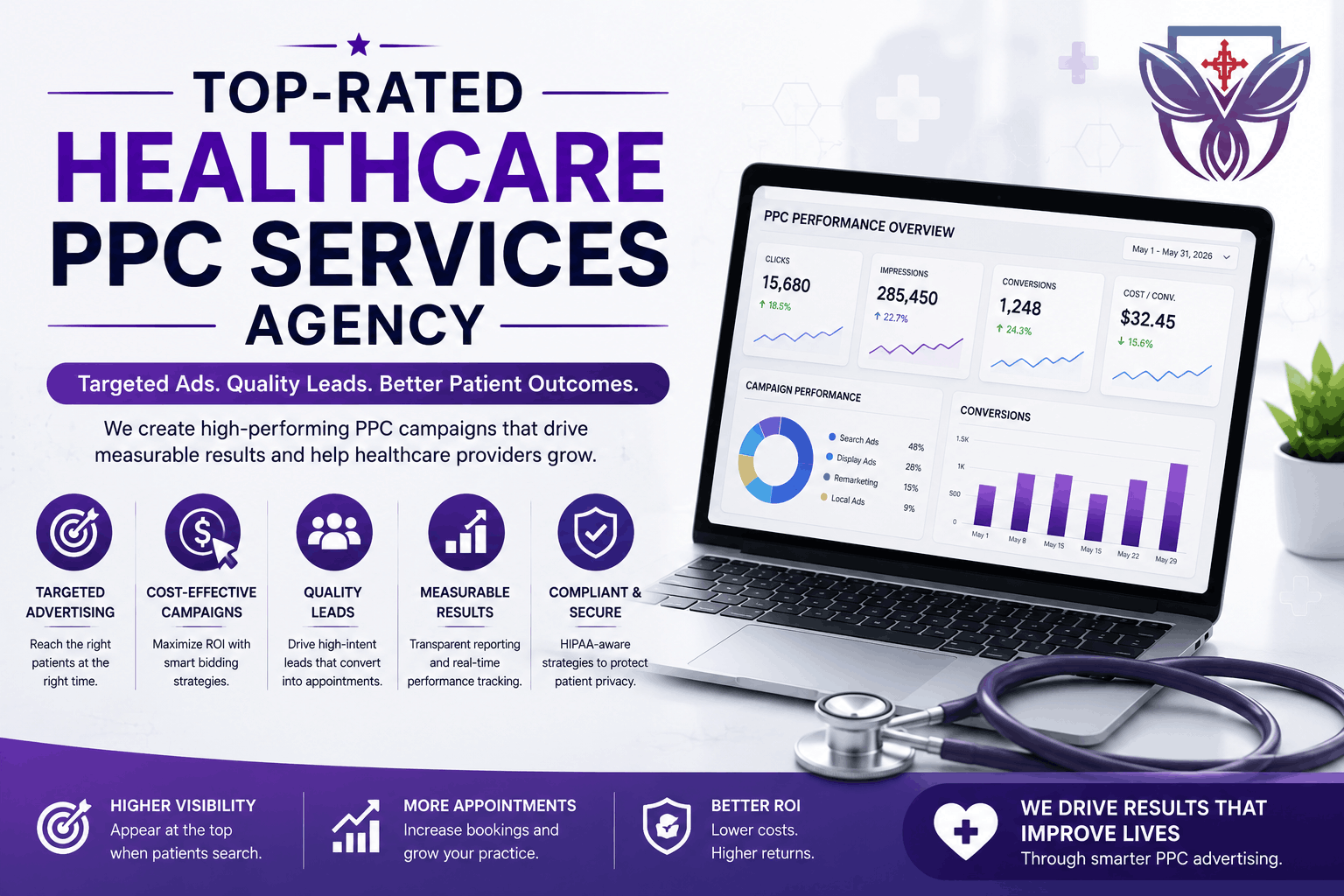
Picking the right PPC partner can make or break a medical practice growth this year. I have spent over 15 years in SEO and paid media, and I have watched clinics waste tens of thousands of dollars on agencies that treat healthcare ads like any other e-commerce campaign. That approach almost never works.
Healthcare PPC needs a different playbook, one that respects patient privacy, understands long booking cycles, and speaks to people who are often searching in a moment of worry, not casual browsing.
At SitBuzz Healthcare, this is the exact problem we built our agency to solve. We work with dental clinics, dermatology practices, urgent care centers, and multi-location hospital groups, and this guide walks through everything I look at before recommending any agency to a client, including our own team’s process.
What is Healthcare PPC Advertising?
Healthcare PPC advertising is paid search and paid social marketing built specifically for medical practices, clinics, and healthcare brands. It covers Google Ads, Microsoft Ads, and Meta Ads campaigns that target patients actively searching for care, whether that be urgent care near me or the best dermatologist for eczema.
Unlike standard PPC, healthcare campaigns must work around strict advertising policies from Google and Meta around medical claims, personal health conditions, and patient data. A regular ads agency that has never touched a HIPAA-adjacent account will usually get flagged, rejected, or shut down mid-campaign because they don’t know these rules going in.
A good healthcare PPC agency blends three skills at once:
- Deep knowledge of Google Ads’ healthcare and pharma certification requirements
- Landing page design that converts nervous, first-time patients
- Compliance awareness so ad accounts don’t get suspended over a careless headline
Why Healthcare PPC Matters for Medical Practices
Here’s something most practice owners don’t realize until it’s too late: SEO alone is too slow for a new location or a new service line. If you just opened a second urgent care clinic, you can’t wait eight months for organic rankings to build. PPC gets you in front of patients on day one.
I’ve run campaigns where a single well-targeted urgent care ad group generated qualified visits within 48 hours of launch, something that would take an urgent care seo company several months to achieve through organic content and backlinks alone. That’s not a knock on SEO (I’m an SEO specialist myself, and I always recommend running both together), it’s just a reality of how search intent and the sales funnel work.
A few reasons PPC deserves a real budget line in 2026:
- Instant visibility for new clinics, new locations, or seasonal services like flu shots and allergy treatment.
- Precise targeting by zip code, insurance type, service line, and even device — so your budget only reaches people who can actually walk into your clinic.
- Measurable ROI down to the cost per booked appointment, not just clicks or impressions.
- Competitive defense: if a rival clinic is bidding on your brand name, PPC is the only way to protect that search real estate.
Benefits of Hiring a Specialized Healthcare PPC Agency
I get asked this a lot: “Why can’t we just hire a generalist agency and save some money?” You can, but you’ll usually pay for it later in wasted spend and rejected ads. A specialized agency brings four things a generalist simply can’t match:
Faster account approval. Google healthcare and medicine policies require specific certifications and disclosures. Agencies that only do healthcare work already have templates ready to go.
Better Quality Scores. Landing pages built around symptoms, procedures, and insurance questions convert better, which lowers your cost per click over time.
HIPAA-aware tracking. Conversion tracking has to be set up so patient data never leaks into ad platforms, something a patient services PPC agency handles as a default, not an afterthought.
Smarter budget pacing, Healthcare has seasonal spikes (flu season, allergy season, open enrollment) that a specialized team plans around in advance.
For practices juggling multiple locations or service lines, this expertise compounds fast. One clinic’s campaign structure rarely applies cleanly to another, and a generalist agency will often copy-paste strategies that don’t fit medical search behavior at all.
How We Selected the Best Healthcare PPC Agencies
Before ranking any agency, I built a scoring framework based on what actually matters to a practice owner evaluating a partner, not just what looks good on an agency’s homepage.
Here what went into the evaluation:
| Criteria | Why It Matters |
| Healthcare-specific experience | Avoids policy violations and account suspensions |
| Transparent reporting | Owners need to see cost per lead, not vanity metrics |
| Landing page & CRO capability | Ads alone don’t book patients — pages do |
| HIPAA-conscious workflows | Protects the practice from compliance risk |
| Service breadth (PPC + SEO + GBP) | Long-term growth needs more than ads alone |
| Client retention & reviews | A sign the results actually hold up over time |
I also spoke with practice managers who had switched agencies at least once, since that’s usually when you hear the most honest feedback about what worked and what didn’t.
Top 10 Healthcare PPC Agencies in 2026
1. SitBuzz Healthcare Agency
SitBuzz Healthcare is built around one focus: helping medical practices generate qualified patients through paid search, paid social, local SEO, and Google Business Profile optimization, all under one roof. Our team handles everything from HIPAA-conscious conversion tracking to landing page CRO, so practices aren’t stitching together three different vendors. We work as both a patient services PPC agency for single-location clinics and as a b2b healthcare PPC services partner for medical device companies, health-tech platforms, and multi-location groups that need lead generation at scale. If you want one partner who understands both the clinical side and the marketing side, this is where I’d start the conversation.
2. Cardinal Digital Marketing
Cardinal has built a solid reputation working with hospital systems and larger healthcare networks. Their strength tends to be broader digital strategy across bigger budgets, which suits enterprise healthcare groups more than a solo practitioner just getting started with ads.
3. Web Tonic
Web Tonic focuses on healthcare-specific web design paired with paid media, which makes sense given how much conversion rate depends on the landing experience. They’re worth a look if your current website is the weak link in your funnel.
4. DoctorLogic
DoctorLogic leans heavily into an all-in-one platform model, combining website, PPC, and reputation management for individual practices and small groups. It’s a reasonable fit for practices that want a packaged, self-service-leaning solution.
5. Intrepy Healthcare Marketing
Intrepy works almost exclusively with medical and dental practices, and their team tends to understand the patient journey well, from first search to booked appointment. Practices that want a boutique, healthcare-only shop often shortlist them.
6. Practice Builders
Practice Builders has been around the healthcare marketing space for a long time, with a track record across dental, medical, and specialty practices. Their tenure means they’ve seen plenty of policy changes across Google and Meta over the years.
7. PMG Digital
PMG Digital tends to serve larger healthcare and life sciences clients, with capabilities that stretch across paid media, analytics, and broader brand campaigns. This makes them a stronger match for bigger marketing teams rather than small independent clinics.
8. Panda Healthcare Marketing
Panda Healthcare Marketing positions itself around full-funnel healthcare campaigns, pairing paid ads with content and SEO. Practices that want one team handling both organic and paid channels sometimes prefer this bundled approach.
9. Tebra (formerly PatientPop)
Tebra, previously known as PatientPop, is more of a practice growth platform than a traditional agency, bundling scheduling, reputation management, and marketing tools. It suits smaller practices that want software-plus-marketing in a single subscription.
10. Medical Marketing Guru
Medical Marketing Guru focuses specifically on physician and specialty practice marketing, with an emphasis on reputation and visibility alongside paid campaigns. It’s a smaller shop, which can mean more hands-on attention for solo practices.
Essential Features to Look for in a Healthcare PPC Agency
When I audit a prospective agency for a client, I check for these non-negotiables before anything else:
- Google Ads healthcare certification and a documented history of managing medical or pharma-adjacent accounts
- HIPAA-conscious data handling, especially around call tracking and form submissions
- In-house landing page design and CRO testing, not just media buying
- Transparent, real-time reporting dashboards showing cost per lead and cost per booked appointment
- Local SEO and Google Business Profile support, since paid and organic local visibility reinforce each other
- Experience across your specific specialty, whether that’s dental, dermatology, urgent care, or B2B medical devices
If an agency can’t clearly explain how they handle patient data in their tracking setup, that’s a red flag worth walking away from.
HIPAA Compliance in Healthcare PPC Marketing
This is the section I wish more agencies took seriously. HIPAA doesn’t directly regulate ad platforms like Google or Meta, but it absolutely regulates what a covered entity, your practice, can share with them. That distinction trips up a lot of marketers.
In practice, this means:
- Conversion tracking should capture that a lead happened, not what condition or service the patient searched for
- Call tracking numbers and recordings need proper handling agreements in place
- Meta’s Conversions API and Google’s enhanced conversions require extra care so no protected health information passes through in the payload
- Landing page forms should collect only what’s needed to qualify a lead, not clinical details
I have seen practices get nervous letters from their compliance officer because an agency set up tracking without thinking any of this through. A genuinely HIPAA-aware team builds these safeguards in from the first campaign setup, not as a fix after something goes wrong.
Healthcare PPC Campaign Examples and Case Studies
To make this concrete, here are the kinds of campaign structures I typically see work well across different practice types:
Dental practice, single location: A same-day emergency dental campaign paired with a dedicated landing page and a click-to-call button above the fold. This kind of narrow, urgent-intent campaign consistently produces lower cost per booked appointment than broad “dentist near me” targeting.
Urgent care, multi-location: Location-specific ad groups with dynamic location insertion, paired with Google Business Profile posts and reviews management running in parallel. Pairing this with organic groundwork from an urgent care seo company creates a one-two punch, paid ads capture immediate demand while organic rankings build for the long term.
Medical device / B2B healthcare: LinkedIn and Google Search campaigns targeting procurement and clinical decision-makers, with gated case studies and webinar registrations as mid-funnel conversion points instead of “book now” CTAs. This is where a dedicated b2b healthcare PPC services approach looks very different from consumer-facing patient campaigns, since the buying cycle and decision-makers are completely different.
How to Choose the Right Healthcare PPC Agency
After all the research and framework, here’s the shortlist process I actually recommend to clients:
- Ask for healthcare-specific case studies, not generic e-commerce wins.
- Request a sample reporting dashboard before signing anything, so you know exactly what you’ll be able to see each month.
- Ask directly how they handle HIPAA and patient data in tracking. A vague answer here is a dealbreaker.
- Check if they handle landing pages and CRO in-house, or if that’s outsourced (which usually adds delays).
- Confirm whether they also support local SEO and Google Business Profile, since running these alongside PPC almost always outperforms PPC in isolation.
- Start with a trial period or a single service line before committing your full marketing budget to one partner.
If you want a team that checks every one of these boxes under one contract, that exactly what SitBuzz Healthcare was built to do, reach out and we’ll walk you through a free audit of your current setup.
Frequently Asked Questions
How much does healthcare PPC cost?
Most medical practices spend between $1,500 and $10,000 per month on ad spend alone, with management fees on top of that. The right number depends on your market size, competition, and how many service lines or locations you’re advertising for.
How long does PPC take to generate patients?
Unlike SEO, PPC can start generating booked appointments within the first one to two weeks of launch, once campaigns are properly set up and tracking is verified. Full optimization and stable cost-per-lead numbers usually take 60 to 90 days.
What is the average ROI of medical PPC?
Well-managed healthcare PPC campaigns often return $3 to $5 in patient revenue for every $1 spent, though high-value specialties like dental implants or elective procedures can see even stronger returns. Your actual number depends heavily on landing page conversion rate and average patient lifetime value.
Should I combine PPC with SEO?
Yes, and this is something I tell every client regardless of budget size. PPC delivers speed, while SEO builds compounding, long-term visibility that keeps working even if you pause and spend. Practices that run both together consistently outperform those relying on just one channel.


